Mother of the Bride, Wedding
ALTERATION QUESTIONS YOU SHOULD ASK YOUR CONSULTANT BEFORE PURCHASING A GOWN
With Real Answers by Mira Couture Experts
Before you swipe your card for that non-refundable deposit, you need to know exactly how your dress gets from “sample size” to “custom fit.” A beautiful gown can be ruined by a rushed or inexperienced hand, so transparency is your best friend here.
Here are the essential questions to ask your bridal consultant to ensure your dress is in the best possible hands, with real answers from the experts at Mira Couture.
Logistics and Timing
- “Is the seamstress an actual employee of the boutique, or a contractor you recommend?” You want to know who is legally responsible for the work. At Mira Couture, we stand behind every dress from start to finish. While it’s under our roof, it’s under our care.
- “How many fittings are typically included or required?” On average, it’s 2–3, but complex gowns may need more. Sometimes with major customizations there may be more steps. This is mostly a case by case situation. For certain situations, especially for brides traveling in from out of state, sometimes if it’s a close fit, we can even do all of the alterations in one round!
- “When do we need to start the process?” Ideally, the first fitting should be 2–3 months before the wedding, but a lot of variables can play into this. For example, are you on a weightloss journey, or are there changes you know will be happening to your body between now and the wedding (pregnancy, surgeries…)? Do you live out of state? What does your schedule look like between now and the wedding–ei any major trips, work situations, moving that could impact the timeline?
- “What is the ‘cutoff date’ for my final fitting?” With each tailor and bride’s situation this can very different. For us, with a local bride getting married at a local venue, we may request a final try-on even days before a wedding just to ensure the fit is exact. Typically a final fitting about 2 weeks from the wedding date is ideal. If it’s an option, sometimes it is ideal for a bride to have someone pick up their dress on the way to their wedding venue a day or two before the wedding so it is all steamed and pressed perfectly. Often, we hand deliver it to our brides curbside. This luxury service can save you a lot of money in hiring a professional to hand steam and press your gown before your big day!
Cost and Transparency
“Do you offer flat-fee alteration packages or is it à la carte?” A flat fee covers everything; à la carte charges you for every individual bustle point and hem inch. We don’t feel it’s fair to charge a completely flat fee as sometimes wedding gowns fit fairly well and require minor alterations, hem, and bustle. Whereas certain brides lose a lot of weight from time the gown is ordered. Other brides may be doing major customizations, like creating sleeves, overskirts, changing a bodice or lining their entire gown during the alterations process. We base our alteration cost based on the hours spent on their gown. We have a minimum charge for alterations so brides are not surprised by the cost it will take to do standard minimal alterations and then any hours that went above and beyond that minimum are charged at the hourly rate required to complete the alterations. We try to be as open and communicative about the anticipated cost for alterations when discussing the gown, its details, and any customizations when deciding on THE ONE, as well as throughout the alterations process. Certain alterations are very quick and straightforward where some are very time consuming. Working with the consultant that helped you find your dream gown throughout the alterations process is a huge benefit to there being an open and consistent communication regarding anticipated alteration processes and costs costs.
“How would you anticipate the alterations on a gown like this one to be?” Certain aspects or details on gowns are simply more complicated and time consuming to alter than others and your bridal consultant is very experienced and knowledgeable in this realm.
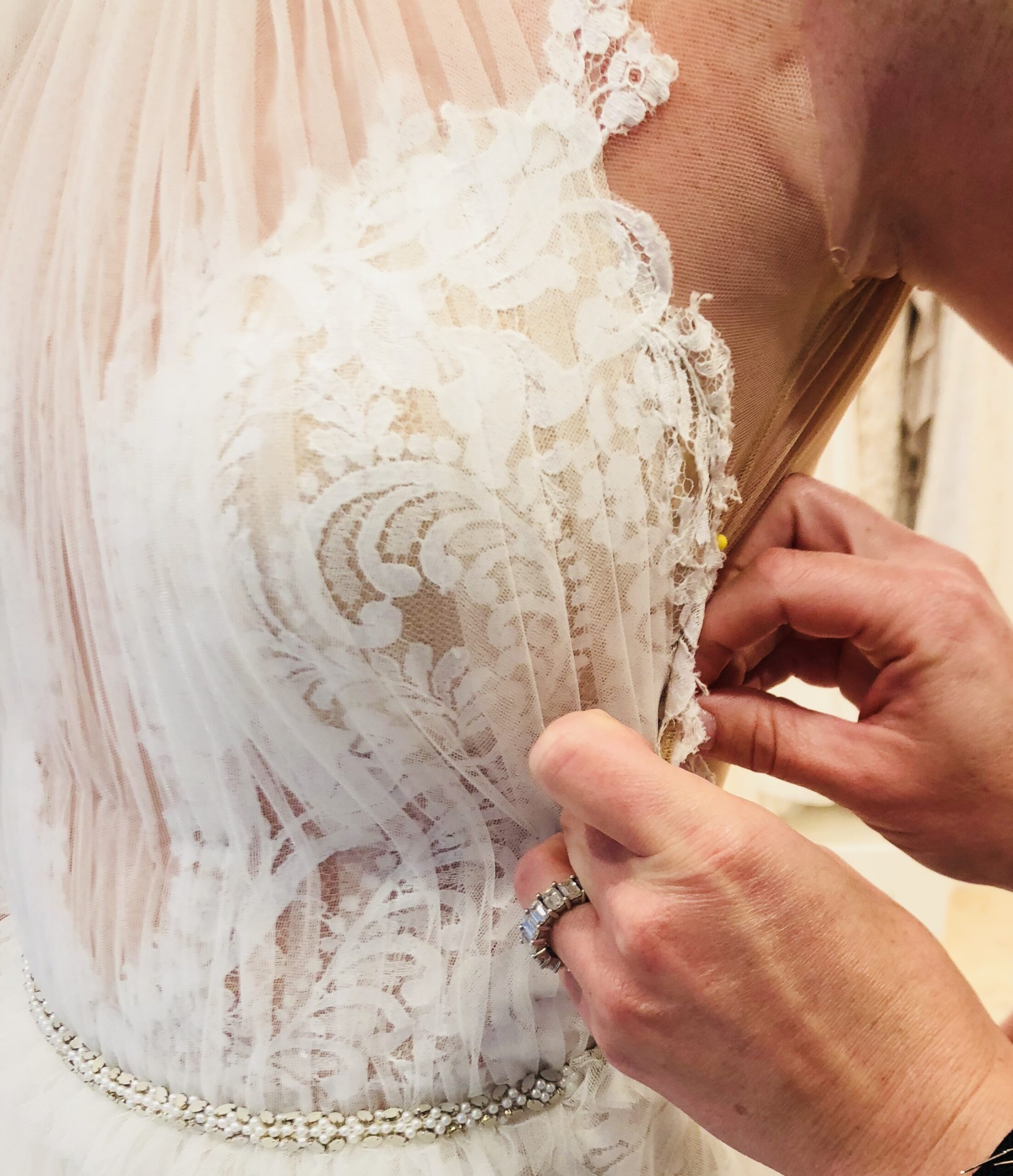
- For example, in the world of hems, a hand beaded lace applique hem often requires the flower to be removed via a hand seam ripper, reapplied and rebeaded–all by hand not by machine. So a hem like this could be double or triple the amount of work than a gown that has 2 layers and requires a clean hem stitch on a machine. A simple tulle hem can look like a quick a easy alteration, but it’s very important that the edge is cut completely clean, smooth, and even, as it would be very noticeable if one of the layers was uneven, and there could be 12 layers of hem on a gown like this, adding up quickly in alteration hours.
- There are so many different types of bustles, and certain bustles look better on certain dresses, and then personal preference plays into it too! To learn more about the different bustle types, ask a knowledgeable Mira Couture consultant or read The Master’s Guide to a Beautiful Bustle.
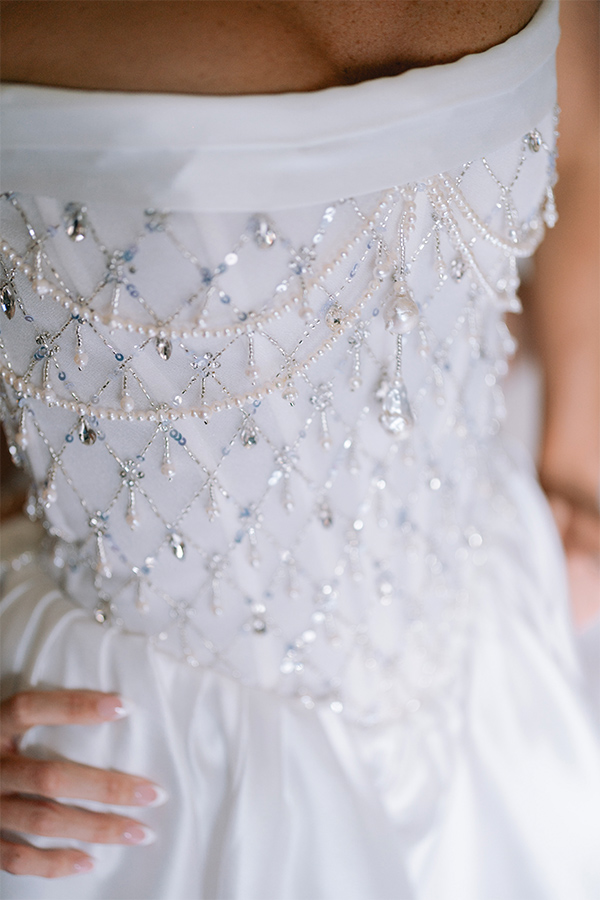
- Beaded gowns typically cost more in alterations because to alter a seam requires the beading being removed, the seam being altered and then the beads being sewn back on, by hand. Multi layered gowns, like all of the sheer, or sheer looking gowns typically also add up in time quicker than single layer gowns, because whatever alteration is required needs to be done exactly the same to each and every layer. Strapless gowns and gowns with built in bustiers, especially for brides with a larger bust or a flatter chest typically require a lot more work than gowns with straps.
- Your consultant is also aware of the many customization options through different designers that may cost you more money up front but save you money in alterations in the end. They can advise you to consider options like custom made to measure, hollow to hem, split sizing, custom bust measurements, and other special changes when it seems like the right opportunity. They know which fabrics can be released, and which cannot. They know which modifications are easy to do in house and what materials are required (such as building up a lace applique neckline), and which modifications are extremely complicated or impossible (e.i. lengthening a train) .
- When purchasing a sample gown, brides often worry that there will be an extreme difference in the cost to alter their sample bridal gown versus ordering new. In some instances there is a very little difference, or it may be a lot less than you think! Best to talk it through with your knowledgeable dress expert!
“Is there a ‘rush fee’ if my dress arrives later than expected from the designer?” While an outside tailor may charge rush fees, we are working with each bride’s time frame to ensure her gown is ready in time for her wedding and work closely with our designers and timelines. While designers may charge a rush fee based on a bride’s order date and wedding date, we prepare brides for a proper schedule to time out fittings so everything can be done in a timely fashion.
“Does the price include a professional final steam or press?” Yes! A lot of brides underestimate the amount of money saved by having that final steam and press done as part of your alterations process rather than having it done by an outside service. Professional dry cleaners in the Chicago area charge anywhere from $550-$1000 for services like this.
Expertise and Capability
“How much experience does your team have with this specific designer’s construction?” Our seamstresses are constantly working with our designer gowns. They become very familiar with each designer’s style of construction and their fabrics.
“Can you perform ‘custom changes’ like adding sleeves, changing a neckline, or adding bra cups?” Absolutely! Our dress makers and tailors are trained in the finest schools from Europe and abroad, some have owned their own tailoring business, and many have backgrounds in patternmaking and advanced couture dressmaking. We make custom couture gowns from scratch in house, so any modifications are easy for our team!
“If I lose or gain weight between now and the wedding, what is your policy for resizing?” It’s natural as it happens all of the time. It’s just a part of the alterations process and falls under the alteration general fees. While major fit adjustments are no problem for our expert team, they may require more complicated processes. For example, releasing a dress a few sizes may require an additional panel to be added, or more in depth work.
“Can you order matching lace or extra fabric directly from the designer if we need it?” Some designers have restrictions on how much extra fabric you can order, but most designers allow us to order whatever materials are needed to create matching sleeves, veils, boleros, overskirts, etc. We have a great relationship with our designers and typically whatever your dream is, we can find a way to make that happen for you!
Safety and Storage
“Where is my dress stored between fittings?” Your gown is stored with us in house, in a climate-controlled, smoke-free, and insured area. It’s stored in a protective zippered garment bag. We store gowns from the time you purchase up until the wedding date provided when the gown was purchased.
If you have any additional questions regarding the alterations process please feel free to reach out to us via phone, email, or text and one of our knowledgeable consultants would be happy to talk through them with you! 312.255.1699 miracouture@gmail.com For more information on what to bring with you to a fitting see our Bridal Fitting Checklist, and to read more about why it’s best to purchase your dress at a boutique with in house alterations see The Alterations: The Most Underestimated Key Component into your Dream Wedding Gown.
Related posts
Mother of the Bride, Wedding
THE ALTERATIONS
The Most Underestimated Key Component into your Dream Wedding Gown Finding "The One" is a core memory. You’ve said yes to the dress, the bubbly has been poured, and you’re already imagining yourself, bouquet in hand saying your “I Do’s”. But there’s a technical hurdle between that "boutique moment" and walking down the aisle: the...
Wedding
BRIDAL FITTING CHECKLIST
Think of your bridal fitting as a rehearsal for the big day. The seamstress isn't just fitting the dress to your body; they are fitting it to the foundation and height you’ll have on your wedding day. If any of these variables change, the fit changes. Here is your master checklist of what to pack...
Wedding
THE MASTER’S GUIDE TO A BEAUTIFUL BUSTLE
The "bustle" is essentially a bit of structural magic. It’s the process of lifting and fastening your wedding dress train so it doesn’t drag on the floor during your reception. Without it, you are essentially a human Roomba, sweeping up cake crumbs and champagne spills all night. Here is your guide to the most popular...
Comments are closed