Wedding
BRIDAL FITTING CHECKLIST
Think of your bridal fitting as a rehearsal for the big day. The seamstress isn’t just fitting the dress to your body; they are fitting it to the foundation and height you’ll have on your wedding day. If any of these variables change, the fit changes.
Here is your master checklist of what to pack in your “fitting bag” for every single appointment.
The Foundation: Undergarments
Your dress is structured to sit on top of specific garments. Changing your bra or shapewear between fittings can change how the bodice sits or where the waistline falls.
- The Exact Bra/Cups: If you aren’t having cups sewn in, bring the strapless bra, adhesive bra, or corset you plan to wear. If you will be taping your boobs up, it’s best to practice this for your fittings.
- Shapewear: Whether it’s Spanx, Skims, or if you are a HoneyLove girl, often the type of underwear you wear with your dress is crucial for many reasons. There are a lot of sheer dresses out there, and you want the transition from your undergrament to your skin to be invisible. With thinner silk charmeuse or crepe fabrics, you don’t want to see any pinches or transitions from undergrament to body either. So in most cases a higher or natural waisted short is your best friend. Some cases the “capri” style or seamless thong works best. Then there’s the Commando (brand, of course!)
- Nipple Covers: If your dress is sheer, nipple covers may be your best friend.
The Height: Wedding Day Shoes
The hemline is calculated to the millimeter. If you change your mind from a 4-inch stiletto to a 2-inch block heel after the first fitting, your dress will be too long, and your dress will need to be re-hemmed. This will significantly add to your alterations cost. If you start with a lower heel and want to go higher, often it’s not possible to make your dress longer.
- The Wedding Shoes: Although we recommend shopping for your wedding shoes next after deciding on your dress and veil, if you don’t have your exact pair of wedding shoes by your first fitting, bring shoes with the same heel height you plan to wear. We love to be exact so may still wait for the real deal, but it’s the next best thing!
- Beauty doesn’t always have to be pain: Think about comfort, you don’t want to be distracted on your wedding day by thinking about how much your feel hurt. It’s totally fine to have a more beautiful shoe planned for the first half of the wedding, with a plan to change into a more comfortable shoe as the night goes on. A lot of brides plan their “second look” around a more comfortable shoe for dancing the night away in! We’ve seen custom sneakers, cowboy boots, and dainty fancy sandals as a great dance the night away shoes. Platforms are also a great option to change into when your feet start to hurt, because often they can give you similar height so your long gown won’t be dragging on the floor too much, but can often be a lot more comfortable.
- Practicality, not always our favorite word in fashion: Will you be walking on grass, cobblestone, or gravel? Perhaps a thicker heel is ideal. How tall is your fiance? Is the proportion of your heights when you stand next to each other important to you? These are all questions I would consider when shopping for your shoes. When it comes to the style of the shoes, it’s often difficult to match whites or ivories. Don’t buy a shoe that is final sale without knowing you like the way it will look next to the hem of your dress, or without having an opportunity to wear them around your house and check the comfort factor.
- These are a few of our favorite shoes: Jimmy Choo, Bella Belle, Stewart Weitzman, Loeffler Randal, Badgley Mischka, and Rene Caovilla tend to understand brides and the bridal world. They tend to design shoes that are beautiful and work with current dresses and while also understanding practicality. However, don’t feel like you have to spend a lot of money on your shoes! When your shoes are on your feet with a long gown you will barely see them. If you’re on a tighter budget, go with the “chipper chicken,” you can use the money you would spend on expensive luxury shoes on some beautiful earrings, or to upgrade your honeymoon!
The “Total Look:” Accessories
Proportions matter. Seeing the dress with your accessories helps you decide on final tweaks, like where a sleeve should end or how high a neckline should be.
- Your Veil: Check to see how it falls in proportion to your dress, front, back, and side. If you have a blusher look at it with the blusher over your face and back. Take a look at how the veil aligns with the length of your train. It is much easier to decide on your veil at the same time as when you are purchasing your gown. If for whatever reason you don’t, definitely try to have that finalized by your first fitting! Think about how you will be wearing your hair. Will it be in an updo, down, half up? Do you prefer the veil to sit closer to the front of your head or further back?
- Jewelry: Often times statement necklaces can take away from the look. Of course, there are exceptions where it totally makes the look (Enter Kim Kassas bridal chokers). It’s important to think about how the jewelry will work together with the entire look. Your fitting is a great opportunity to figure all of this out before the big day!
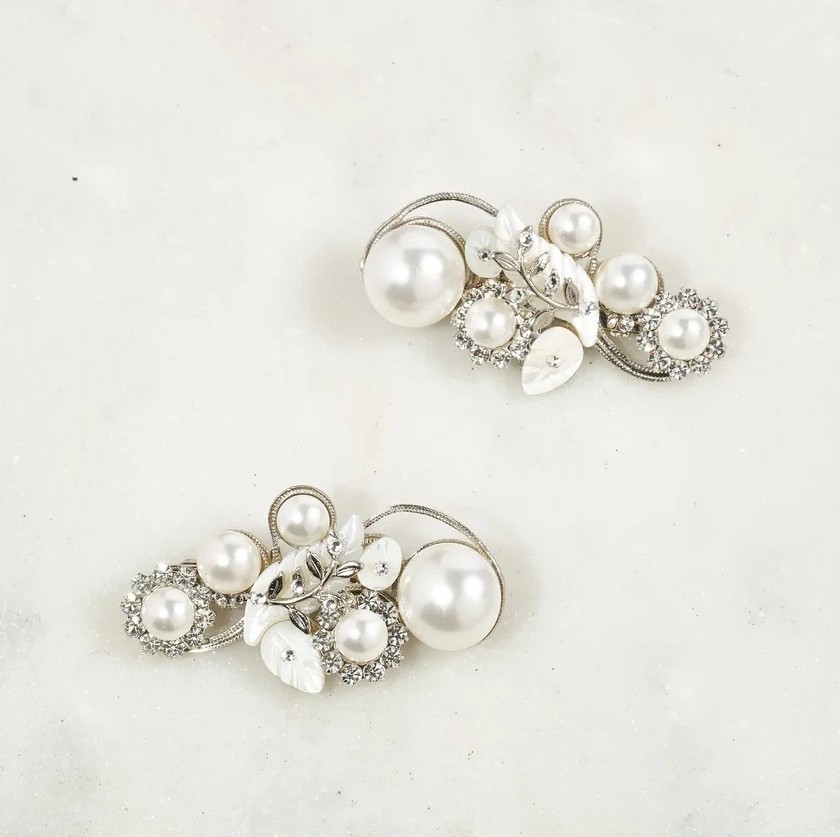
- Hair Accessories: Usually, once the ceremony and pictures are done, brides have had enough of their veils, especially if they are very long. Back in the day, brides would bustle their veils (sometimes with velcro, gasp!). Today, a lot of brides are opting for gorgeous heirloom combs or pins to place in their hair once they ditch the veil. No bride wants to have “naked” hair on their wedding day!
Personal Prep & Practicality
- Hair Tie or Clip: Even if you’re wearing your hair down, you’ll want to pin it up during the fitting so the seamstress can see the back construction and zipper.
- Minimal Makeup: Avoid heavy foundation or self-tanner right before a fitting. You do not want to be the bride who leaves a smudge on a $3,000 white gown, especially when it’s yours! Cleaning a bridal gown before your wedding is not an expense you want to have to add to the budget.
- A “Bustle Buddy”: For your final fitting, it can be helpful to bring the person who will be helping you get dressed (Mom, Maid of Honor, etc.). The consultant helping you will give a lesson on how to do the bustle for your dress. Don’t worry if they’re not able to come and you come to your fittings solo! We do plenty of bustle tutorials via video!
- Payments: Typically, your first try on or first fitting appointment is when you will pay the remaining balance on your gown if you did a 50% deposit when placing your order. So be prepared to take care of that on that day. Typically, as you get towards the end of alterations, your alterations payment will be due.
If you have any additional questions regarding what to bring for your fittings with us, please feel free to reach out to us via phone, email, or text and one of our knowledgeable consultants would be happy to go through this with you and your specific gown! 312.255.1699 miracouture@gmail.com
Related posts
Mother of the Bride, Wedding
THE ALTERATIONS
The Most Underestimated Key Component into your Dream Wedding Gown Finding "The One" is a core memory. You’ve said yes to the dress, the bubbly has been poured, and you’re already imagining yourself, bouquet in hand saying your “I Do’s”. But there’s a technical hurdle between that "boutique moment" and walking down the aisle: the...
Mother of the Bride, Wedding
ALTERATION QUESTIONS YOU SHOULD ASK YOUR CONSULTANT BEFORE PURCHASING A GOWN
With Real Answers by Mira Couture Experts Before you swipe your card for that non-refundable deposit, you need to know exactly how your dress gets from "sample size" to "custom fit." A beautiful gown can be ruined by a rushed or inexperienced hand, so transparency is your best friend here. Here are the essential questions...
Wedding
THE MASTER’S GUIDE TO A BEAUTIFUL BUSTLE
The "bustle" is essentially a bit of structural magic. It’s the process of lifting and fastening your wedding dress train so it doesn’t drag on the floor during your reception. Without it, you are essentially a human Roomba, sweeping up cake crumbs and champagne spills all night. Here is your guide to the most popular...
Comments are closed